
A toy can stop before the cells are empty
A capacity headline answers one narrow question: how much charge or energy a cell can deliver under stated test conditions. A toy asks a different question. Can the installed cells keep the electronics above their operating voltage while a motor starts, a gearbox meets resistance, a speaker plays and LEDs switch on? If the voltage at the device terminals falls below its cutoff for long enough, the toy may reset or stop even though the cells still contain energy. That is not automatically a defective battery. It may be a mismatch between the cell, the current pulse, the contacts, the wiring and the cutoff chosen by the toy designer.
This is why a serious battery brief starts with the device. Record the number and size of cells, their series or parallel arrangement, the acceptable voltage range, average current, peak current, pulse duration and the operating sequence. Add the real compartment dimensions and spring-contact condition. The same nominal AA cell can behave differently in a clean laboratory holder and in a deep toy compartment with long wires, small springs or repeated impacts. A supplier can compare candidate cells only when those inputs are visible; otherwise the recommendation is a guess dressed as a specification.
- Capture voltage at the device terminals, not only at an unloaded cell
- Record the event that causes a reset, weak sound or stalled motion
- Repeat the measurement with the production-intent contacts and wiring
- Separate expected end-of-discharge behaviour from an intermittent connection
Map the load timeline before comparing chemistry
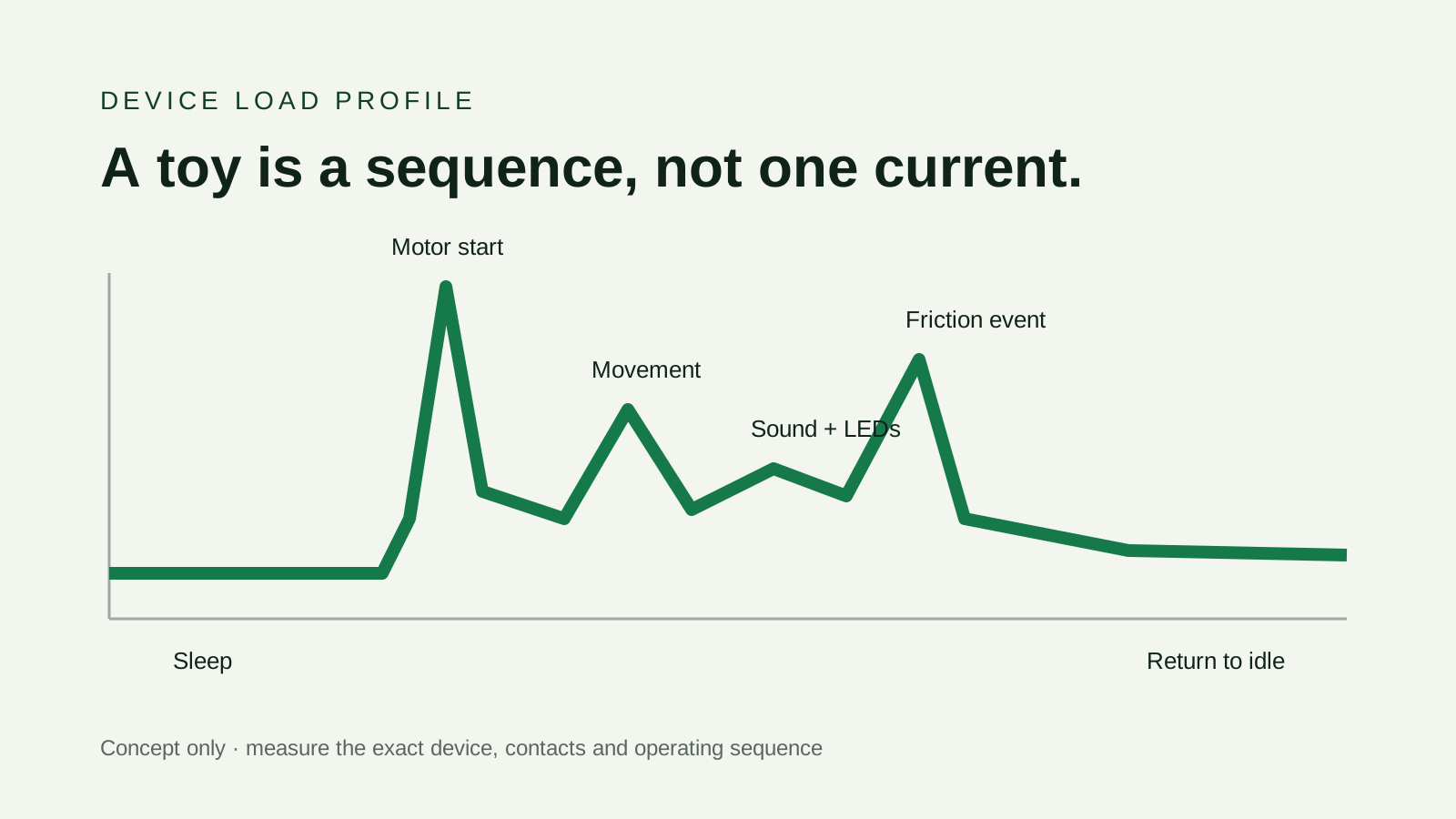
Most interactive toys have more than one electrical state. Storage or sleep may draw very little. A button press wakes a controller. A motor then creates a short starting pulse, followed by a lower running load. Sound and light effects can overlap that motion. A blocked wheel, tight gearbox or child holding a moving part may raise the motor load again. The useful test record therefore looks like a timeline, not one current number. It shows which functions overlap, how long each state lasts and whether the toy returns to sleep correctly after the action finishes.
Measure a normal sequence and a defined worst credible sequence. The aim is not to abuse the product until it fails; it is to capture operating conditions that can occur in ordinary use. For a walking toy, that might include starting on a high-friction surface. For a talking plush product, it may be simultaneous audio, light and movement. For a remote-controlled vehicle, it may be steering while accelerating. Note ambient temperature and cell state of charge, because internal resistance and available output change through discharge and with temperature. The result becomes an application envelope against which candidate cells can be sampled.
| Operating state | What to record | Why it changes the shortlist |
|---|---|---|
| Sleep or standby | Current and time between uses | Shows whether self-discharge or standby dominates replacement interval |
| Wake-up | Current pulse, duration and terminal voltage | Reveals reset risk before the motor even starts |
| Motor start | Peak current and minimum terminal voltage | Tests whether the source can support the hardest short event |
| Normal action | Average current and cycle duration | Supports an energy budget for repeatable runtime testing |
| High-friction action | Defined mechanical condition and current | Captures a credible variation without inventing an abuse test |
Nominal voltage is not the device voltage window
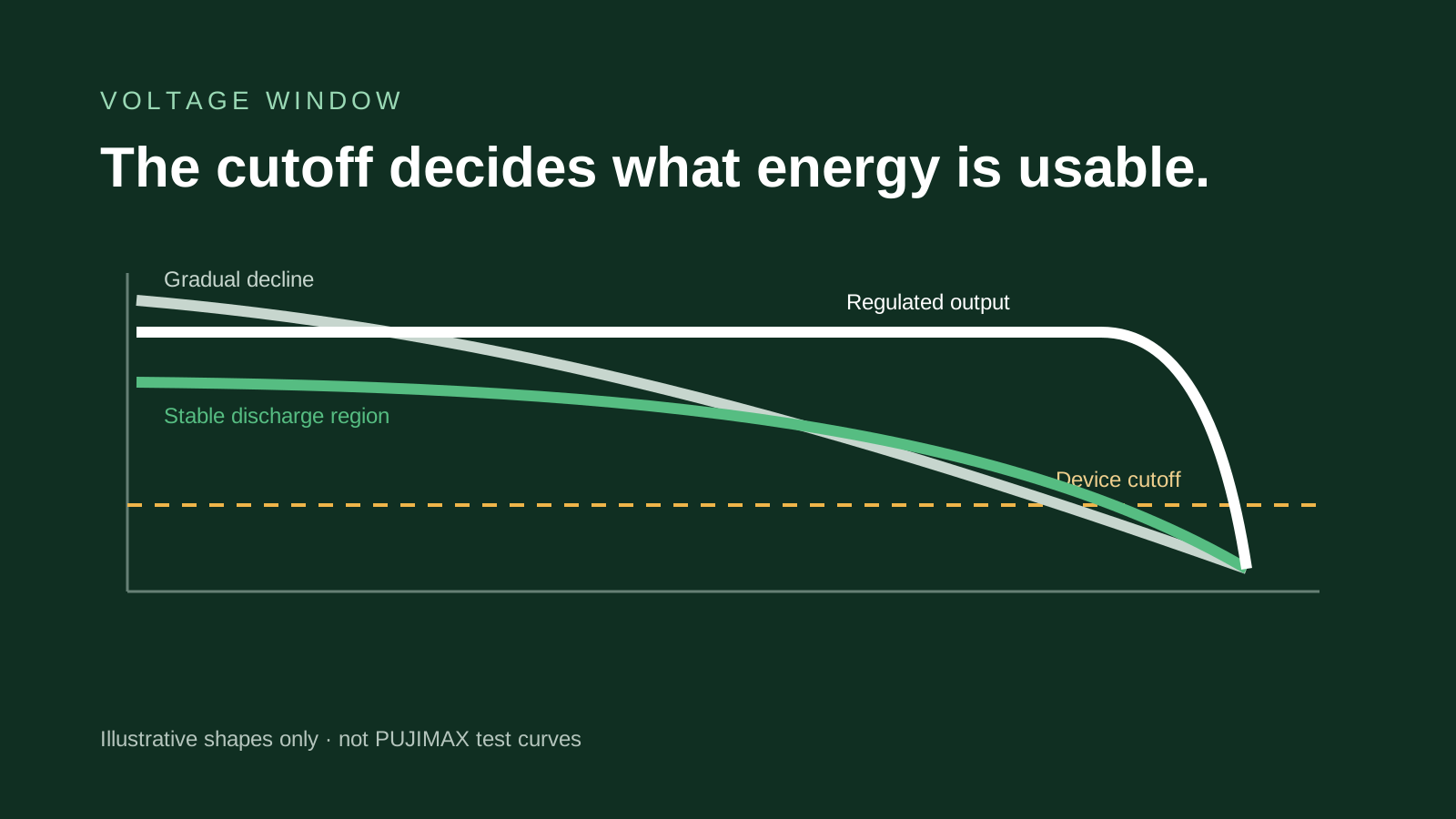
A product marked for 1.5 V cells does not necessarily require 1.5 V at every moment. Primary cells begin higher and decline during use. Nickel-metal hydride cells are commonly described by a lower nominal voltage and a comparatively stable discharge region. A regulated rechargeable lithium AA or AAA is designed to hold its stated output until its internal electronics reach a shutdown condition. These profiles interact differently with the toy's brownout threshold and battery indicator. Panasonic's public eneloop guidance explains the general reason many devices designed for dry cells can operate across a voltage range, but that explanation is not proof for an individual toy or for a different supplier's cell.
The engineering task is to identify the toy's real minimum operating voltage under load. Measure where the controller resets, where audio distortion becomes unacceptable and where the motor can no longer complete its intended action. Also observe the warning behaviour. A gradual voltage decline may give a visible period of weaker performance. A regulated output can keep performance consistent and then stop with less warning. Neither pattern is universally better. The correct choice depends on whether stable operation, advance warning, rechargeable workflow, cost or a particular user experience carries the greatest weight in the product brief.
Compare complete battery programs, not isolated cells
Alkaline, Ni-MH and regulated rechargeable lithium can each be reasonable in the right program. A primary alkaline program can simplify the initial package and may suit a toy used infrequently. A Ni-MH program can support repeated use, but it introduces a separate charger, charging instructions and a nominal-voltage profile the toy must accept. A regulated rechargeable lithium program may provide a different output profile and charging method, while also bringing model-specific protection, transport documentation and end-of-discharge behaviour into the evaluation. The comparison should include purchase cost, expected use pattern, replacement or charging access, supervision and the instructions provided to the consumer.
The pack architecture matters too. Decide whether batteries are supplied, installed, sold separately or built into a rechargeable product system. Define which charger is allowed and how a user identifies correct polarity and charging status. If loose rechargeable cells can be removed, consider how matched sets are kept together and how damaged wraps or contaminated contacts are handled. None of these questions can be answered by an energy rating. They belong in the product requirement, artwork and manual, and they should be reviewed before packaging is approved rather than added after a production run is complete.
- Compare the cell, charger, cable, instructions and replacement policy as one system
- Confirm whether charging happens inside or outside the toy
- Define how caregivers inspect, replace and dispose of cells
- Request transport documents for the exact lithium model and shipping configuration
Battery selection does not replace finished-toy safety work
The United States Consumer Product Safety Commission identifies battery access, overheating, chargers, labelling and instructions among the issues relevant to battery-operated toys. IEC 62115 defines a safety scope for electric toys. These sources establish an important boundary: the battery is a component inside a complete product. A cell report cannot determine whether a child can reach the battery, whether a compartment screw remains secure, whether wiring overheats under a fault, whether a supplied charger is appropriate or whether the instructions meet the rules of the destination market.
The buyer or finished-product manufacturer should map responsibilities before sampling. The battery supplier can provide the exact cell specification and the documents available for that model. The toy developer controls the enclosure, contacts, charging circuit, mechanical protection, warnings and foreseeable-use testing. An importer may have additional market-access duties. When lithium cells ship, the route and packing configuration add transport requirements. Treating those responsibilities as separate workstreams prevents a generic document from being presented as proof of a finished product it never evaluated.
| Question | Battery-supplier input | Finished-product responsibility |
|---|---|---|
| Cell identity | Exact model, specification and revision | Use the approved model in the bill of materials |
| Electrical behaviour | Model-level limits and available test evidence | Validate the cell in the complete toy and operating sequence |
| Battery access | Cell dimensions and condition guidance | Design and test the compartment and retention method |
| Charging | Permitted charging method for the cell or pack | Integrate the approved charger and user instructions |
| Market compliance | Component documents that actually cover the model | Assess and document the finished toy for the destination market |
Turn the brief into a sample plan
A useful sample comparison controls the variables. Use production-intent toys, the same firmware and mechanical condition, and cells from identified sample lots. Define the starting state of charge, ambient condition, action sequence and failure criterion. Record terminal voltage during the important events rather than checking open-circuit voltage after the toy stops. If the toy has a battery indicator, record when it changes state and how much useful operation remains under the agreed sequence. Repeat enough samples to expose variation; one successful toy is a demonstration, not a release decision.
The acceptance record should state what was tested and what was not. It can show that a candidate completed a defined number of cycles or met a minimum action requirement under stated conditions, but it should not be converted into a universal consumer runtime claim without a separate claims review. Keep sample identity, test date, toy revision and acceptance criteria together. If the battery, firmware, motor, gearbox, contacts or compartment changes later, assess whether the validation needs to be repeated. This is the traceability that turns a cell recommendation into an engineering decision.
- Freeze the toy revision, firmware, motor and contact design
- Identify every sample cell by exact model and lot
- Write the action cycle and end point before testing
- Record terminal voltage during peak events
- Approve the product sample separately from packaging artwork
The sourcing brief we would ask for
A first enquiry does not need a finished laboratory report, but it should remove the biggest unknowns. Send the toy category and age grading, cell size and quantity, series arrangement, compartment dimensions, average and observed peak current, minimum operating voltage, action sequence, runtime or replacement target, charging workflow, destination market, first order volume and expected annual demand. Attach the relevant device schematic or test trace if it can be shared. Identify which claims are already printed on packaging so the sample plan can test the statements that matter commercially.
PUJIMAX can then shortlist current models against the published specifications and identify which additional model-level documents are available. The shortlist remains provisional until it is checked in the finished toy. If a requested claim cannot be supported by the current evidence, the correct next step is a defined test or a narrower claim, not a stronger marketing sentence. That approach may feel slower than choosing the largest capacity number, but it reduces the chance of discovering cutoff, warning, charging or document problems after artwork and production are already locked.
| Input | Example format | Decision it supports |
|---|---|---|
| Electrical window | Cell count, minimum and maximum device voltage | Chemistry and regulated-output feasibility |
| Load profile | Average, peak, duration and operating sequence | Output capability and validation design |
| User workflow | Replace, external charge or in-product charge | Cell/charger program and instructions |
| Market | Countries, age grading and sales channel | Document, warning and packaging review |
| Commercial target | First order, annual volume, target pack and cost | Available model, MOQ and customization path |
Sources and evidence checked
- Nickel-metal hydride application and design criteriaVARTA Microbattery · checked 2026-08-28
- eneloop voltage and device-use FAQPanasonic Energy · checked 2026-08-28
- Toy safety business guidanceU.S. Consumer Product Safety Commission · checked 2026-08-28
- IEC 62115 electric-toy safety scopeInternational Electrotechnical Commission · checked 2026-08-28
Frequently asked questions
Why can a motorized toy stop when a battery tester still shows energy?
The toy may need a short current pulse that pulls terminal voltage below its operating cutoff. Open-circuit voltage or remaining energy does not reproduce that loaded event.
Does a 1.5 V label mean a toy cannot use 1.2 V Ni-MH cells?
Not by itself. The decision depends on the toy's actual voltage window, cutoff, load profile and instructions. Test the exact cell in the production-intent toy.
Does a cell document certify the finished toy?
No. Cell documents cover their stated model and scope. Battery access, wiring, charging, warnings and finished-toy assessment remain product-level responsibilities.